Can a toothache give you a headache? A clear, expert guide from Lateral Dental
If you’ve ever wondered “can a toothache give you a headache?”, you’re definitely not alone. Many patients who visit us at Lateral Dental in Sheffield are surprised to learn how closely the teeth, jaws and head are connected — and how easily pain can spread between them.
Toothache can be sharp, throbbing or dull, but when it starts to trigger head pain, it becomes even harder to ignore. Understanding why this happens can make it much easier to decide what to do next, whether that’s seeing our emergency dentist in Sheffield or booking a routine visit to your dental hygienist.
This guide explains the link between tooth pain and headaches, the most common causes, how to treat the problem, and when to seek urgent advice. It also outlines how the team at Lateral Dental can help — whether you need fillings, root canal care, hygiene treatment or support for dental anxiety.
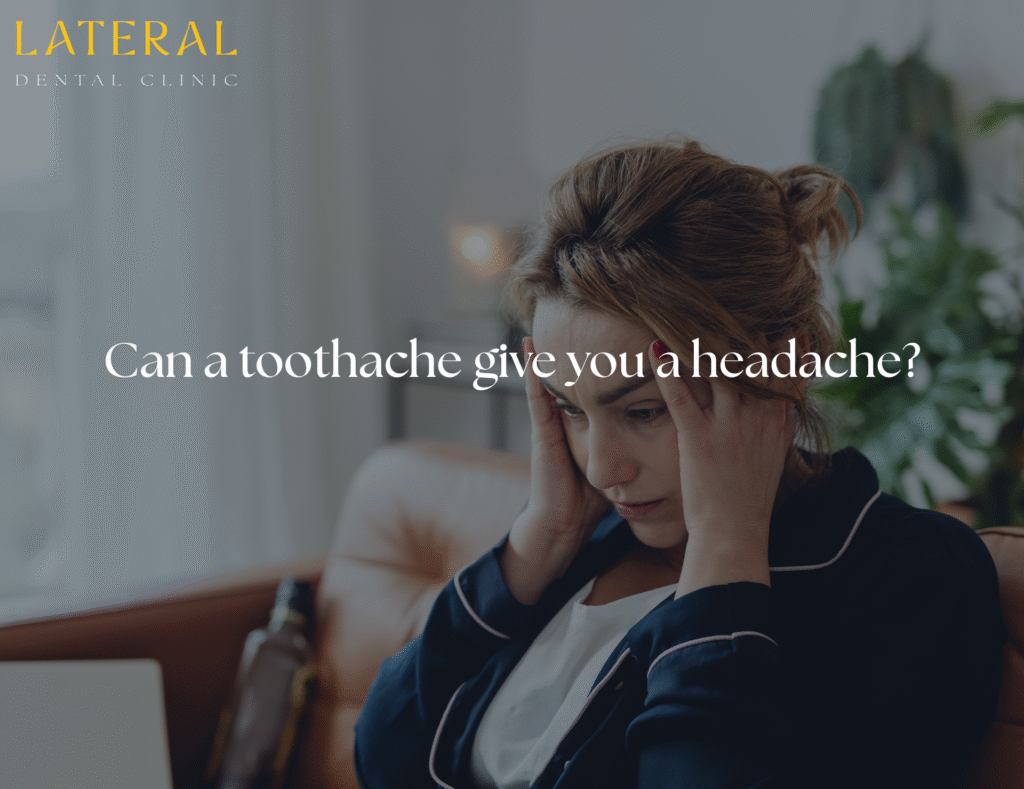
The short answer: can a toothache give you a headache?
Yes — a toothache absolutely can give you a headache, and it happens more often than most people realise. Tooth pain stimulates the trigeminal nerve, the large nerve that supplies the teeth, face and part of the head. When this nerve becomes irritated, the signal can radiate through the surrounding areas, causing discomfort that feels like:
- pressure around the temples
- pain behind the eyes
- an aching jaw
- a generalised headache
- even ear or neck discomfort
So, if you’re asking “can a toothache give you a headache?”, the answer is a definite yes — and the cause is usually treatable with the right dental care.
If your tooth is causing severe pain, remember you can always access our emergency dentist service in Sheffield seven days a week.
Why a toothache can trigger a headache: simple explanations
To understand the link, it helps to know how the head and mouth communicate. There is nothing overly technical here — just the basics that help you recognise what your symptoms mean.
1. Shared nerve pathways
The trigeminal nerve is the main nerve that connects:
- teeth
- jaw joints
- gums
- facial muscles
- parts of the scalp
When a tooth becomes inflamed or infected, the same nerve fibres that register toothache can also trigger head pain. This is why a sharp toothache can sometimes be felt as a dull headache or vice versa.
2. Muscle tension from clenching
If you clench or grind due to pain or stress, the jaw muscles become strained.
Tense muscles around the jaw and temples often lead to headaches, especially tension-type headaches.
Our clinicians often see this in patients who grind subconsciously because of untreated decay or gum inflammation. If this sounds familiar, a visit to our dental hygienist in Sheffield or a bite assessment may be helpful.
3. Sinus involvement
Upper back teeth sit extremely close to the sinus cavity. When there’s:
- a sinus infection, or
- inflammation caused by a dental problem
pressure may build up and cause pain that spreads to the forehead and cheeks.
4. Infection that spreads
An untreated dental infection can cause swelling, heat and nerve irritation in the surrounding tissues. This may lead to persistent headaches, fever or generalised facial pain.
If you suspect infection, don’t wait — prompt care from our emergency dentist in Sheffield is essential.
Common dental problems that cause headaches
Here are the most frequent culprits behind toothache-related headaches, many of which we treat daily at Lateral Dental Sheffield.
1. Tooth decay
Large or deep cavities irritate the tooth’s nerve. The longer decay is left, the more intense the pain becomes — and the more likely it is to radiate to the head.
Treatment usually involves a filling, which you can read about here:
2. Dental infections and abscesses
A dental abscess puts significant pressure on the nerve endings and surrounding tissues. This pressure is one of the strongest links between toothache and headache.
Severe throbbing, swelling, fever or a bad taste in the mouth can all be signs of infection. These are considered urgent and need same-day attention.
Visit:
3. Cracked or broken teeth
A crack can irritate the nerve, especially when biting or chewing. This can trigger pain that spreads across the face or temple.
4. Gum disease
Inflamed gums can cause discomfort that radiates into the jaw and head, particularly if infection reaches deeper tissues.
Good hygiene appointments are key here:
5. Grinding and clenching (bruxism)
Bruxism is a major cause of headaches. Constant muscle tension around the jaw triggers tension headaches and even migraines.
If grinding is linked to dental anxiety, our dental sedation service for nervous patients may help you receive treatment more comfortably.
6. Root canal problems
If the nerve inside the tooth is inflamed or infected, headaches are common.
Root canal treatment removes the infection and saves the tooth.
Learn more:
Can a toothache give you a headache on one side?
Yes — and this is very common.
Because the trigeminal nerve branches into left and right sides, pain often stays on the same side as the affected tooth. If you have a right-sided tooth problem, you may notice a right-sided headache, and the same applies on the left.
This is one of the biggest clues that your headache is dental in origin.
Headache caused by a toothache vs a regular headache: how to tell the difference
It can sometimes be difficult to tell whether a headache is just a headache or linked to dental issues. Here are signs the pain might be dental:
- It gets worse when chewing
- You feel pain when biting down
- Cold or sweet foods trigger sharp discomfort
- You have swelling or tenderness in the gums
- Pain radiates into the jaw, ear or temple
- You have an obvious dental problem (crack, decay, loose filling)
If any of these sound familiar, book an appointment at Lateral Dental or use our Emergency Dentist Sheffield service if the pain is severe.
How to treat toothache-related headaches
Treatment depends entirely on the cause. Here are the most common solutions we provide at Lateral Dental:
✔ Fillings for decay
When decay is cleaned and restored with a filling, the nerve calms down and headaches usually stop.
✔ Root canal treatment for infected nerves
This removes the source of pain and prevents the infection spreading.
✔ Antibiotics (only if infection has spread)
These help support treatment but do not replace dental procedures.
✔ Hygiene treatment for gum issues
Removing plaque and bacteria reduces inflammation and stops the pain spreading.
✔ Nightguards for grinding
Protective appliances reduce pressure on the teeth and jaw muscles, helping prevent headaches.
✔ Sedation for nervous patients
If anxiety is stopping you from getting the care you need, sedation can make treatment stress-free.
When to see a dentist urgently
You should seek immediate help through our
if you have:
- severe facial swelling
- pain that keeps you awake
- fever
- difficulty opening your mouth
- a spreading infection
- trauma to the teeth
These symptoms can indicate a serious dental infection, which should never be left untreated.
Preventing toothache and headaches
You can significantly reduce the chances of both by:
- attending regular check-ups at Lateral Dental
- keeping your hygiene appointments
- brushing twice daily with fluoride toothpaste
- limiting sugary or acidic foods
- wearing a nightguard if you grind your teeth
- treating early signs of decay promptly
You can book regular care here:
What makes Lateral Dental a trusted choice
- Our team treats hundreds of cases of dental pain and infection every year.
- We provide fillings, root canals, hygiene services, emergency care and sedation — all under one roof.
- Advice is based on clinical evidence, NHS guidelines, and years of hands-on experience.
- We provide clear explanations, transparent options and support for anxious patients.
Final thoughts
So, can a toothache give you a headache?
Yes — and the good news is that both the toothache and the headache usually improve once the dental issue is treated.
Whether you need a filling, hygiene treatment, root canal therapy, pain relief or help with anxiety, the team at
is here to make your care smooth, comfortable and effective.
If toothache is disrupting your day — or waking you up at night — don’t wait.
You can book routine or urgent care anytime.
Questions our patients ask
Yes. Toothache can irritate the trigeminal nerve, which also carries sensation to the head and face, causing headaches.
Jaw pain often comes from clenching, infection or inflammation around the teeth. These can all trigger headaches.
Most of the time, yes. Once the underlying dental issue is resolved, the headache usually disappears.
Absolutely. Sinus pressure can affect upper teeth and cause headaches at the same time.
If you suspect the pain comes from a tooth, you should see a dentist first.
Our emergency team at Lateral Dental can assess this quickly.