Invisalign before and after: Real results from our patients
There’s nothing quite like seeing real results to help you decide whether a treatment is worth it. That’s exactly why we’ve put together this guide — to show you genuine Invisalign before and after cases from patients treated right here at Lateral Dental Clinic in Sheffield by Dr Matthew Stephens (GDC No. 263989).
Every smile in this article belongs to a real person who walked through our door feeling self-conscious about their teeth and left with a result they’re genuinely happy with. No stock photos, no exaggerated promises, just honest outcomes from an experienced clinician.
Whether you’re considering Invisalign yourself or you’re still in the “just looking” stage, this guide will give you a clear picture of what Invisalign can achieve, how the process works and what to realistically expect.
What is Invisalign?
Invisalign is a system of clear, removable aligners that gradually straighten your teeth without the need for traditional metal braces. Each set of aligners is custom-made using 3D digital scanning technology, and you move through a series of trays — typically changing them every one to two weeks — as your teeth shift into their planned positions.
The aligners are made from a smooth, BPA-free plastic called SmartTrack, which is designed to fit snugly over your teeth. They’re virtually invisible when worn, which is one of the main reasons Invisalign has become so popular with adults and older teenagers who want straighter teeth without the look and feel of fixed braces.
At Lateral Dental Clinic, Dr Matthew Stephens and Dr Anupa Stephens (GDC No. 264031) are both experienced in providing Invisalign treatment. Dr Matthew Stephens has treated a wide range of cases, from mild crowding to more complex bite corrections, and the before and after images throughout this article reflect that breadth of experience.
What can Invisalign actually fix?
One of the most common questions we hear is: “Will Invisalign work for my teeth?” The honest answer is that it depends on the complexity of your case, but Invisalign is effective for a wide range of orthodontic issues. Here are the most common ones we treat.
Crooked teeth
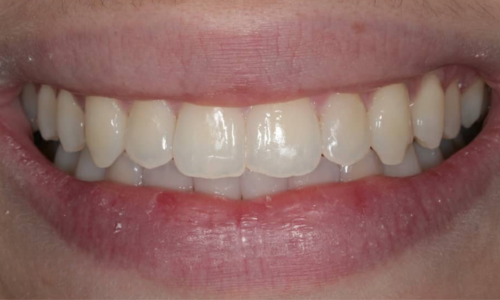
This is by far the most frequent reason patients come to us for Invisalign. Crooked or misaligned teeth can affect your confidence, make cleaning more difficult and contribute to uneven wear over time. Invisalign is particularly effective at correcting mild to moderate crowding, and even more significant cases can often be treated successfully with careful planning.
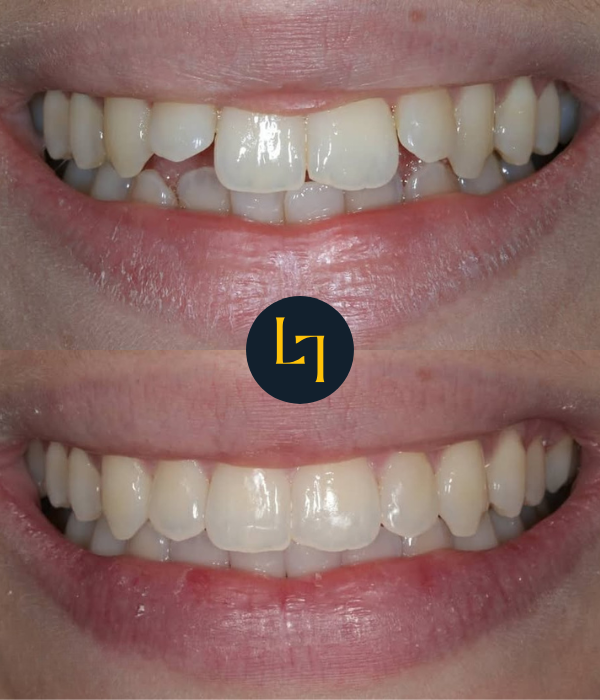
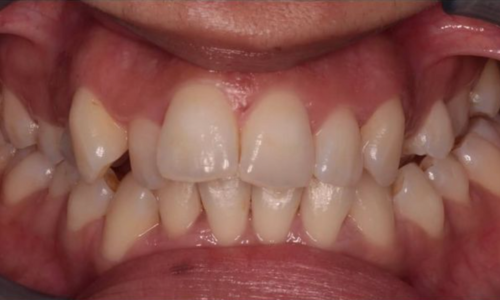
The case above is a good example of what Invisalign can do for crowded teeth. You can see how the teeth have been brought into alignment, creating a more even, natural-looking smile.
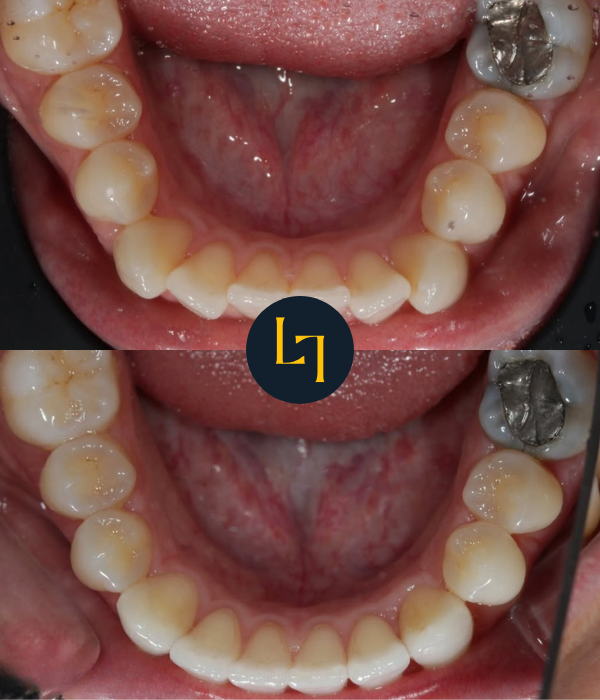
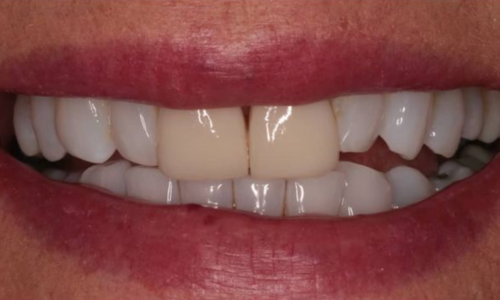
Lower teeth are often overlooked, but they matter just as much. Crowding in the lower jaw can make flossing nearly impossible and increases the risk of decay between teeth. This patient’s lower arch was straightened with Invisalign, making their teeth not only look better but significantly easier to keep clean.
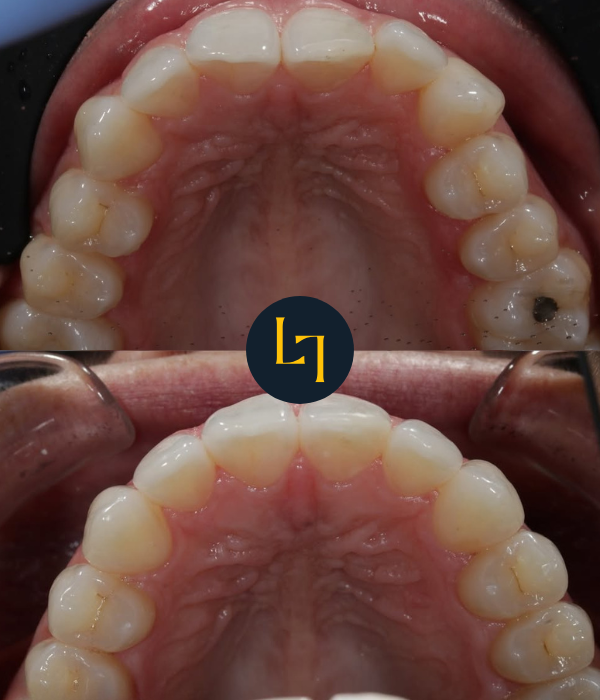
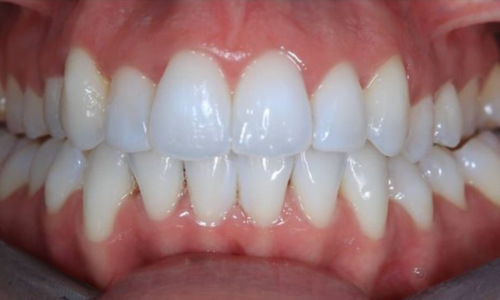
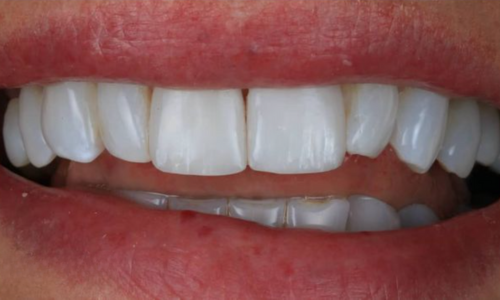
Upper teeth are what most people notice first when you smile. This case shows how Invisalign resolved crowding in the upper arch, giving the patient a much more balanced and confident smile.
Overbite
An overbite is where the upper front teeth overlap the lower front teeth more than they should. A mild overbite is normal, but a more pronounced one can cause issues with jaw comfort, tooth wear and aesthetics. Invisalign can correct many overbite cases by gradually repositioning both the upper and lower teeth.
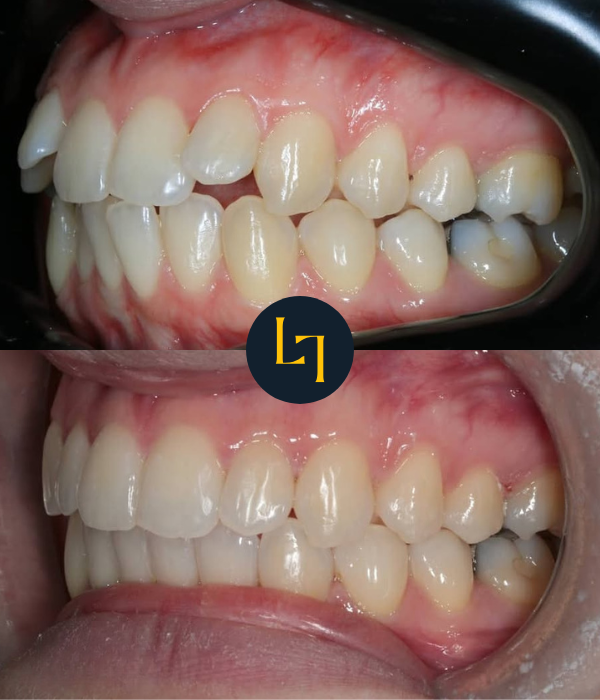
This patient came to us with both an overbite and crowding. The Invisalign before and after images show a clear improvement in both the bite relationship and the alignment of the teeth — a result that improved both the look and function of their smile.
Gaps between teeth
Small gaps (known as diastemas) between teeth are common, particularly between the upper front teeth. While some people are perfectly happy with a gap, others find it affects their confidence or causes food to get trapped. Invisalign can close gaps effectively by moving the teeth together in a controlled, predictable way.
Mild to moderate bite issues
Beyond overbites, Invisalign can also address underbites (where the lower teeth sit in front of the upper teeth), crossbites (where some upper teeth sit inside the lower teeth) and open bites (where the front teeth don’t meet when you bite together). The suitability of Invisalign for bite correction depends on the severity, and Dr Stephens will always be upfront about whether Invisalign is the right approach or whether an alternative would give you a better result.
Real Invisalign before and after cases
Seeing real cases is the best way to understand what’s possible. Every case below was treated by Dr Matthew Stephens at Lateral Dental Clinic in Sheffield. Each patient gave their consent for these images to be shared.
Case: Invisalign combined with teeth whitening
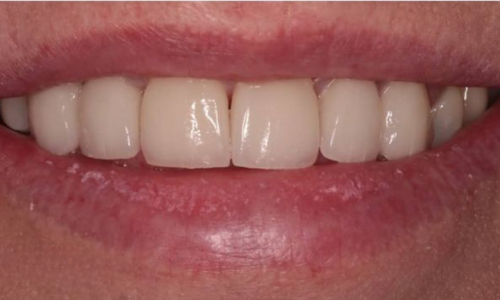
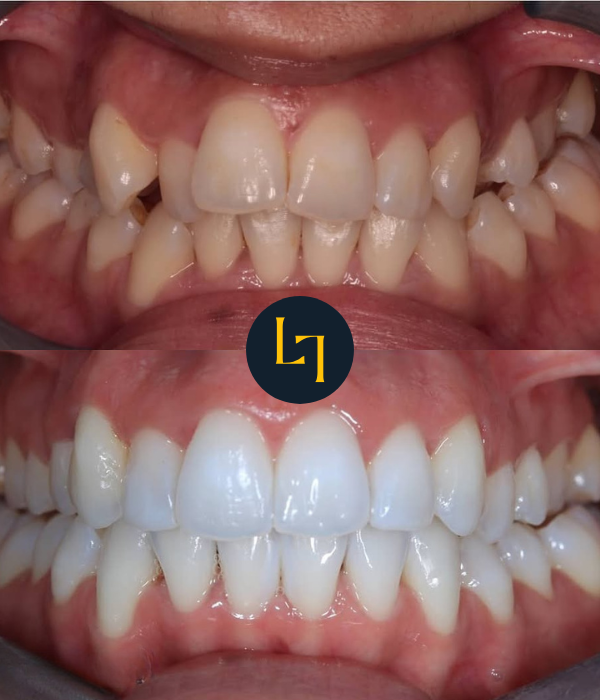
Some patients choose to combine their Invisalign treatment with cosmetic dentistry treatments for a more complete transformation. This patient had crooked teeth and also wanted a brighter smile, so after completing Invisalign, they had professional teeth whitening to finish things off. The combination of straightening and whitening gave a result that looked naturally beautiful.
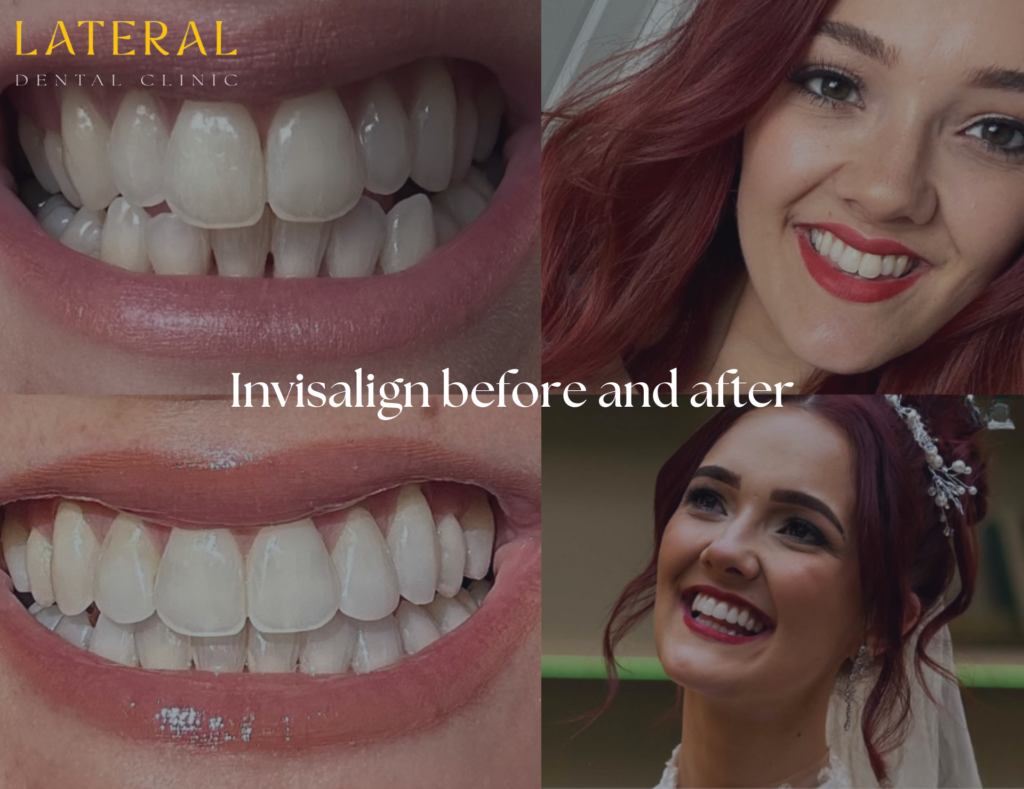
Case: straight teeth just in time for wedding
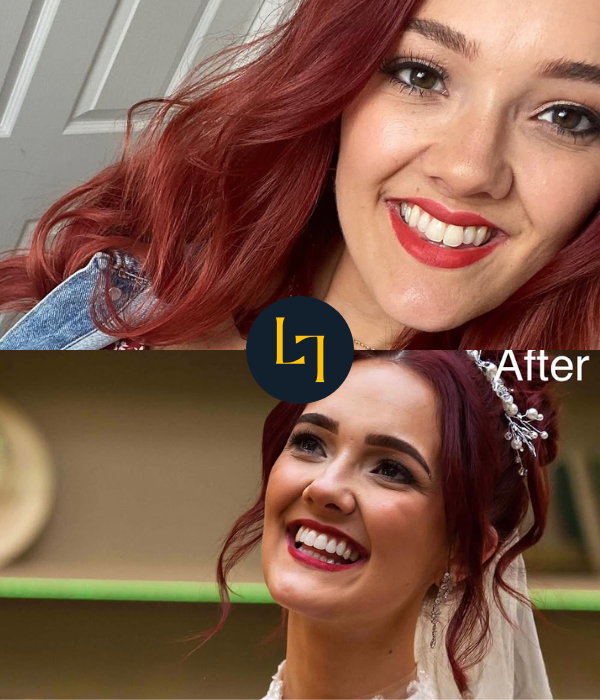
This is one of our favourite stories. This patient came to us knowing she wanted her smile sorted before her wedding day. With a clear timeline to work towards, Dr Stephens planned her Invisalign treatment to ensure her teeth were beautifully aligned in time for the big day. The result? A beaming, confident smile in every wedding photo.
Case: significant crowding
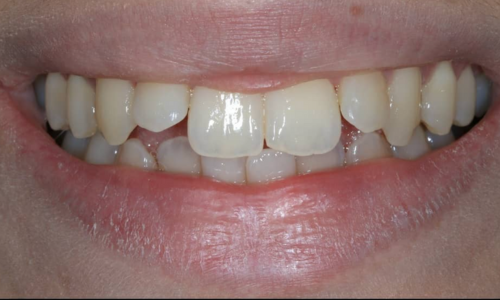
Invisalign isn’t just for minor tweaks. This patient had quite heavy crowding, and there were genuine questions at the start about whether clear aligners could achieve the result they wanted. After careful planning and a longer treatment course, the transformation was remarkable.
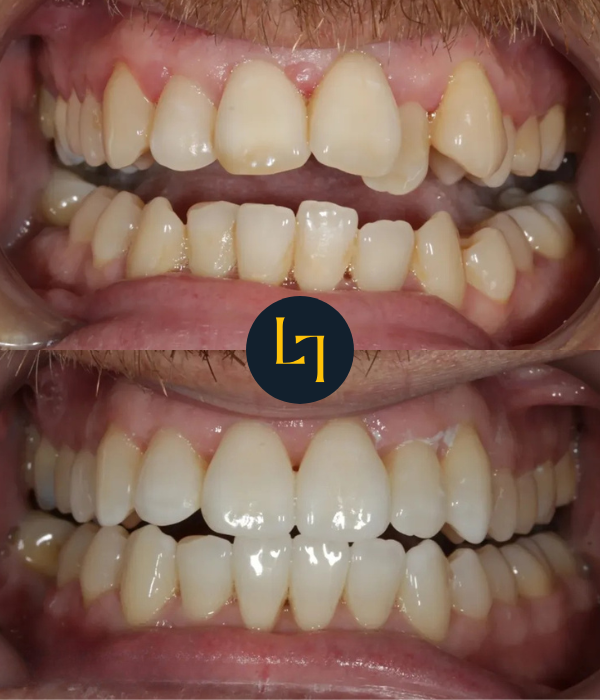
This case is a great example of what’s possible when treatment is properly planned by an experienced clinician. It’s also a reminder that even if you think your teeth are “too crooked” for Invisalign, it’s worth getting a professional assessment — you might be surprised.
Every one of these results was achieved without a single metal bracket or wire. Just clear, removable aligners worn consistently over a planned treatment period.
How does the Invisalign process work?
If you’re thinking about Invisalign, here’s what the journey typically looks like at our practice.
- Step 1: Consultation. You’ll meet with Dr Stephens for a thorough assessment. This includes a clinical examination, photographs and a digital scan of your teeth using an iTero scanner — no messy impressions. Dr Stephens will discuss your goals, explain what Invisalign can realistically achieve for your case and answer any questions.
- Step 2: Treatment plan. Using the digital scan, a detailed 3D treatment plan is created. This shows you a virtual preview of how your teeth will move at each stage, right through to the final result. You’ll be able to see your predicted outcome before you commit to anything.
- Step 3: Aligners are made. Once you’re happy with the plan, your custom aligners are manufactured. You’ll receive several sets at a time, each one designed to make small, precise movements.
- Step 4: Wear your aligners. You’ll wear each set for one to two weeks, for 20 to 22 hours a day. The aligners are removed for eating, drinking (anything other than water) and brushing your teeth.
- Step 5: Regular check-ups. You’ll attend appointments every six to eight weeks so Dr Stephens can monitor your progress and give you your next sets of aligners.
- Step 6: Retainers. Once your teeth are in their final position, you’ll wear retainers to keep them there. This is a crucial step — without retainers, teeth can gradually shift back towards their original positions over time.
Can Invisalign be combined with other treatments?
Absolutely, and this is something we do regularly at Lateral Dental Clinic. Many patients find that once their teeth are straight, they want to take things a step further. Common treatments people combine with Invisalign include:
- Teeth whitening. Straightening and whitening together can make a dramatic difference. As you saw in the Invisalign before and after case above, the combination creates a naturally bright, even smile.
- Composite bonding. If you have chips, small gaps that remain after alignment or uneven tooth edges, composite bonding can be used to refine the shape and finish of your teeth after Invisalign. It’s a minimally invasive way to add those finishing touches.
- Other cosmetic treatments. Depending on your goals, treatments like porcelain veneers or dental crowns may be discussed as part of a broader smile makeover plan. Dr Stephens and Dr Anupa Stephens will always explain your options clearly and help you choose what’s right for you.
How long does Invisalign take?
Treatment time varies depending on the complexity of your case. As a general guide:
- Mild cases (minor crowding or small gaps): 3 to 6 months
- Moderate cases (noticeable crowding or bite issues): 6 to 12 months
- Complex cases (significant crowding or bite correction): 12 to 18 months or more
During your consultation, Dr Stephens will give you a realistic estimate based on your specific situation. One of the advantages of the digital planning process is that you’ll know the expected timeline before treatment begins.
How much does Invisalign cost?
Cost depends on the complexity and length of your treatment. At Lateral Dental Clinic, we provide a clear, itemised treatment plan with costs at your consultation so you know exactly what to expect. We also offer payment plan options to help make treatment more accessible.
We’d rather you come in for a consultation and get an accurate quote based on your teeth than rely on ballpark figures online. Every case is different, and the cost reflects the amount of work involved in achieving your result.
Why choose Lateral Dental Clinic for Invisalign?
Our practice in Sheffield is led by Dr Matthew Stephens (GDC No. 263989) and Dr Anupa Stephens (GDC No. 264031), both of whom are committed to providing high-quality cosmetic dentistry in a relaxed, friendly environment. The Invisalign before and after results throughout this article are testament to the standard of care and attention to detail that goes into every case.
We also understand that some patients feel anxious about dental treatment. That’s why we offer sedation options to help make your experience as comfortable as possible.
If you’ve been thinking about straightening your teeth but haven’t taken the first step yet, we’d love to hear from you. A consultation is a chance to ask questions, see what’s possible for your teeth and get all the information you need to make a decision — with no pressure whatsoever.
Disclaimer
This article was reviewed by Dr Matthew Stephens (GDC No. 263989), principal dentist at Lateral Dental Clinic, Sheffield. All before and after images show real patients treated by Dr Stephens with full consent. For personalised advice about Invisalign or any other dental treatment, please get in touch with our team.
Questions our patients ask
Invisalign aligners are made from clear, transparent plastic and are very difficult to spot when worn. Most people won’t notice you’re wearing them unless they’re looking closely. This is one of the biggest reasons adults choose Invisalign over traditional braces — you can straighten your teeth without it being obvious.
You may feel some pressure or mild discomfort for the first day or two after switching to a new set of aligners. This is completely normal and is a sign that the aligners are working. The discomfort is generally much less than what people experience with traditional braces, and most patients find it manageable without painkillers.
Yes. Because the aligners are removable, you take them out to eat and drink. This means there are no food restrictions — unlike fixed braces, where you’d need to avoid hard or sticky foods. Just brush your teeth before putting the aligners back in to keep everything clean.
Your teeth will gradually start to shift back towards their original positions. This is true for any orthodontic treatment, not just Invisalign. Wearing your retainer as instructed — typically every night at first, then a few nights a week long term — is essential for maintaining your results. The Invisalign before and after results you see in this article were all maintained with proper retainer use.
There’s no upper age limit for Invisalign. As long as your teeth and gums are healthy, Invisalign can work for you whether you’re 18 or 68. In fact, a significant proportion of our Invisalign patients at Lateral Dental Clinic are adults in their 30s, 40s and 50s who’ve wanted straighter teeth for years and have finally decided to go for it.