Wisdom Teeth Soreness
Wisdom teeth have a reputation, and it is largely deserved. For many people, the arrival of these third molars — usually between the ages of 17 and 25 — brings with it days or weeks of aching, throbbing discomfort that makes eating, sleeping and concentrating genuinely difficult.
But wisdom teeth soreness is not one single thing. The discomfort can range from a mild, manageable ache as a tooth pushes through the gum, to severe, spreading pain caused by infection or impaction that needs professional treatment as soon as possible. Knowing the difference matters, because treating them the same way is a mistake many people make.
At Lateral Dental Clinic in Sheffield, led by Dr Matthew Stephens GDC No. 263989 and Dr Anupa Stephens GDC No. 264031, we see patients with wisdom tooth concerns regularly. This guide covers everything you need to know: why wisdom teeth cause soreness, what to do about it at home, when it becomes an emergency, and what professional treatment options are available to you.
What Are Wisdom Teeth and Why Do They Cause Problems?
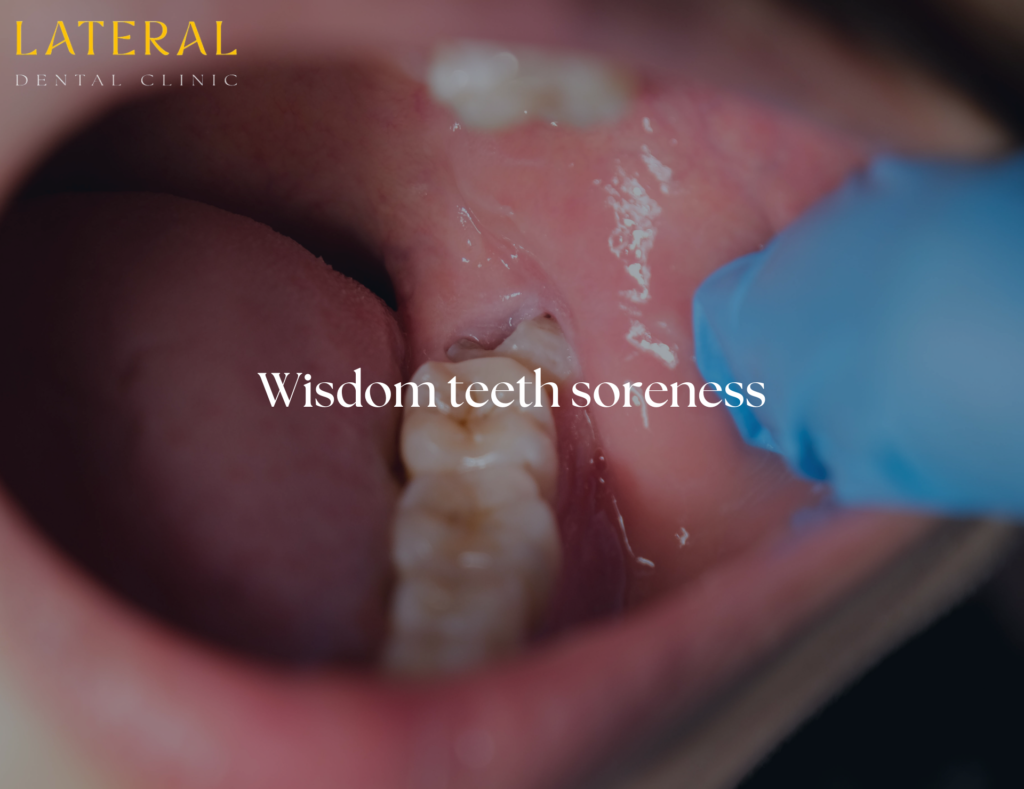
Wisdom teeth are the four third molars that sit at the very back of the mouth — one in each corner. They are the last teeth to develop and the last to erupt, typically making their presence known in the late teens or early twenties, though for some people they do not emerge until their thirties.
The reason they cause so many problems comes down to space. The human jaw, particularly in modern populations with softer diets than our ancestors, often does not have enough room to accommodate four additional large teeth. When wisdom teeth try to push through into an already crowded mouth, one of several things can happen:
- The tooth erupts partially, leaving part of the crown covered by a flap of gum tissue
- The tooth grows at an angle, pressing against the adjacent molar
- The tooth becomes fully or partially impacted, meaning it is trapped beneath the gum and cannot emerge properly
- The tooth erupts completely but is so far back that cleaning it properly is very difficult
Each of these scenarios creates a different pattern of discomfort — and a different treatment approach.
What Causes Wisdom Teeth Soreness?
Understanding the specific cause of your wisdom teeth soreness is the first step towards managing it properly.
Normal Eruption Discomfort
When a wisdom tooth is actively pushing through the gum tissue, it creates pressure and mild inflammation in the surrounding area. This kind of soreness is generally a dull, persistent ache around the back of the jaw, sometimes radiating towards the ear or down the neck. It tends to come and go as the tooth moves through in stages, and it is typically manageable with over-the-counter pain relief.
This is the most benign form of wisdom teeth soreness. It does not necessarily mean anything is wrong — it is simply the physical process of a tooth erupting through bone and gum tissue.
Pericoronitis
Pericoronitis is one of the most common causes of significant wisdom teeth soreness, and it is worth knowing about because it can escalate quickly if not addressed.
It occurs when a wisdom tooth has only partially erupted, leaving a flap of gum tissue (called an operculum) partially covering the crown. This flap creates a pocket between the tooth and the gum where bacteria, food debris and plaque accumulate — and because the area is almost impossible to clean properly, infection takes hold readily.
The symptoms of pericoronitis include:
- Throbbing pain at the back of the jaw that worsens over time
- Swollen, red gum tissue around the wisdom tooth
- A bad taste or smell in the mouth, particularly around the affected area
- Difficulty opening the mouth fully (trismus)
- Swollen lymph nodes under the jaw or in the neck
- General feeling of being unwell, with or without a mild fever
Mild pericoronitis can sometimes be managed with thorough cleaning of the area, warm salt water rinses and antibiotics where appropriate. More severe or recurrent pericoronitis usually indicates that the wisdom tooth needs to be removed, as the underlying anatomy makes it impossible to prevent the infection from recurring.
If you are experiencing these symptoms, do not wait to see whether they settle on their own. Book an appointment with your dentist. Pericoronitis that is left untreated can spread to the surrounding soft tissues, which becomes a significantly more serious and more complex problem to treat.
Impaction
An impacted wisdom tooth is one that cannot erupt properly because it is blocked by the adjacent tooth, the jawbone or both. There are several types of impaction, described by the angle at which the wisdom tooth is positioned: horizontal, vertical, mesial (angled towards the front of the mouth) and distal (angled towards the back).
Horizontal impaction is generally the most uncomfortable, because the wisdom tooth is growing directly into the roots of the second molar beside it. This creates persistent, deep pressure and aching that does not resolve because the tooth has nowhere to go.
Impacted wisdom teeth do not always cause immediate pain. Some are discovered on routine dental X-rays and are causing no symptoms at all. Others cause significant and ongoing wisdom teeth soreness. Whether an impacted tooth needs to be removed depends on a number of factors including its position, whether it is causing damage to adjacent teeth, and whether it is associated with infection or cyst formation. This is something your dentist can assess properly from a clinical examination and up-to-date X-rays.
Tooth Decay in Wisdom Teeth
Because wisdom teeth sit so far back in the mouth, they are the teeth most commonly brushed and flossed inadequately. Even patients with good oral hygiene often find it difficult to reach the back surfaces of their wisdom teeth effectively. The result is that wisdom teeth are disproportionately prone to decay compared to the rest of the mouth.
A decaying wisdom tooth can cause sharp, temperature-sensitive pain that is difficult to distinguish from other types of wisdom teeth soreness without a proper clinical examination. If the decay is caught early, it may be possible to restore the tooth with a filling. If the decay has progressed significantly or the tooth is poorly positioned, extraction may be the more practical long-term solution.
In cases where decay has reached the nerve of the tooth, root canal treatment may be considered if the tooth is in a good enough position to justify preserving it. This is something that requires assessment on a case-by-case basis.
Gum Disease Around Wisdom Teeth
The same difficulty in cleaning wisdom teeth that makes them prone to decay also makes the gum tissue around them prone to gum disease. Bacteria accumulate in the pockets around the tooth, causing inflammation, bleeding and soreness that can persist or worsen over time. In some cases, this can lead to bone loss around both the wisdom tooth and the second molar beside it.
If gum disease around a wisdom tooth is contributing to your discomfort, professional general dental treatment will be needed to assess the extent of the problem and decide whether cleaning, treatment or extraction is the most appropriate course of action.
Cyst Formation
In rarer cases, a fluid-filled cyst can develop around the crown of an unerupted or impacted wisdom tooth. These cysts expand gradually within the jawbone and can cause significant pressure, discomfort and — over time — damage to surrounding teeth and bone if not identified and treated.
Cysts around wisdom teeth are typically identified on X-rays before they cause obvious symptoms, which is one of the reasons regular dental check-ups with up-to-date radiographs matter so much. If a cyst is identified, referral to an oral surgeon is typically required.
How to Manage Wisdom Teeth Soreness at Home
While professional assessment is always the right long-term answer for persistent wisdom teeth soreness, there are things you can do at home to manage discomfort in the short term.
- Over-the-counter pain relief: Ibuprofen is generally more effective for dental pain than paracetamol because it addresses both pain and inflammation. Take it as directed on the packaging and with food. If you cannot take ibuprofen for any reason, paracetamol is a suitable alternative. Do not exceed the recommended dose of either.
- Warm salt water rinses: Dissolve half a teaspoon of table salt in a glass of warm (not hot) water and rinse gently around the back of the mouth for 30 to 60 seconds. Do this two to three times a day. Salt water is a mild antiseptic that can reduce inflammation and help keep the area around a partially erupted tooth clean. It will not treat an infection, but it can reduce the bacterial load and ease mild soreness.
- Topical anaesthetic gels: Gels containing benzocaine, applied directly to the sore gum tissue, can provide short-term numbing relief. These are available from most pharmacies and are particularly useful for managing discomfort overnight.
- Cold compress: Applying a cold compress or ice pack wrapped in a cloth to the outside of the jaw for 15 to 20 minutes at a time can reduce swelling and provide pain relief, particularly in the first 24 to 48 hours of acute soreness.
- Avoid the triggers: Very hard, crunchy foods can aggravate wisdom teeth soreness significantly. Stick to softer foods while you are experiencing discomfort, and chew on the other side of the mouth where possible.
- Keep the area clean: Gently brush the area around the wisdom tooth with a soft-bristled toothbrush. It can be tempting to avoid brushing a sore area, but allowing debris to accumulate will only worsen the situation.
These measures can take the edge off genuine wisdom teeth soreness, but they will not resolve the underlying cause. If your discomfort lasts more than a few days, worsens rather than improves, or is accompanied by swelling, fever or difficulty opening your mouth, you need to be seen by a dentist.
When Is Wisdom Teeth Soreness an Emergency?
There is a difference between discomfort that can wait for a routine appointment and symptoms that need same-day attention.
Contact an emergency dentist as soon as possible if you experience:
- Rapidly worsening swelling in the jaw, cheek, face or neck
- Difficulty opening your mouth or swallowing
- Fever alongside dental pain
- Spreading pain that extends towards the throat, ear or down the neck
- A bad taste or discharge in the mouth that has appeared suddenly
- Severe, uncontrolled pain that does not respond to over-the-counter medication
These symptoms can indicate a spreading infection (cellulitis or abscess) that is moving beyond the tooth and into the surrounding soft tissues. This is a situation where waiting is not safe. In rare cases, dental infections that spread to the neck or airway can become life-threatening very quickly.
At Lateral Dental Clinic, we offer emergency dental appointments in Sheffield for exactly these situations. If you are experiencing any of the symptoms above, call us and we will prioritise seeing you as soon as possible.
What Are the Treatment Options?
The right treatment for wisdom teeth soreness depends entirely on the cause and the position of the tooth. Here is what the main options look like.
Monitoring
If a wisdom tooth is erupting normally, causing only mild soreness and is not associated with infection, decay or impaction, monitoring it at regular check-ups may be entirely appropriate. Not every wisdom tooth needs to be removed, and a dentist who recommends extraction for every patient regardless of clinical need is not giving individually tailored advice.
Cleaning and Irrigation
For mild pericoronitis without spreading infection, a dentist may clean the area under the gum flap and irrigate it with an antiseptic solution. This provides immediate relief in many cases and reduces bacterial levels in the pocket. It may be combined with a short course of antibiotics.
Antibiotics
Antibiotics are sometimes prescribed to control an active infection around a wisdom tooth, but it is important to understand that they treat the infection temporarily — they do not remove the underlying cause. If the anatomy of the tooth makes recurring infection likely, antibiotics are a short-term solution, not a long-term one.
Extraction
Extraction is the definitive treatment for wisdom teeth that are causing recurrent problems, are significantly impacted, are associated with decay that cannot be practically restored, or are damaging adjacent teeth. The procedure is carried out under local anaesthetic and is more straightforward than most patients expect.
For patients who are anxious about the prospect of a wisdom tooth extraction, we offer dental sedation at Lateral Dental Clinic. Conscious sedation allows the procedure to be carried out while you remain deeply relaxed, with little to no memory of the appointment afterwards. Many patients who were dreading the experience find that sedation makes it entirely manageable, and wish they had used it earlier. If dental anxiety has been putting you off getting your wisdom teeth assessed, sedation removes that barrier entirely.
More complex extractions — for example, deeply impacted wisdom teeth with curved roots — may require referral to an oral surgeon for removal under specialist conditions.
The Bottom Line
Wisdom teeth soreness is one of those things that rarely gets better by ignoring it. The discomfort may ease temporarily, but if the underlying cause is pericoronitis, impaction, decay or gum disease, it will return — often worse than before.
The right approach is to get it assessed properly so that you know exactly what you are dealing with. Some wisdom teeth cause a one-off episode of mild soreness and then settle down completely. Others need to come out. The only way to know which applies to you is a clinical examination and, in most cases, a dental X-ray.
At Lateral Dental Clinic in Sheffield, Dr Matthew Stephens and Dr Anupa Stephens bring a combined depth of clinical experience to every assessment. Whether your wisdom teeth soreness is mild and manageable or severe and urgent, we will give you an honest, clear picture of what is happening and what your options are — including sedation if anxiety is part of the equation. You can read more about the full range of treatments we offer in our general dentistry section.
If your pain is severe and you need to be seen urgently, our emergency dental service in Sheffield is here for you.
Disclaimer
The information in this article is intended for general guidance only and does not constitute personalised dental or medical advice. If you are experiencing wisdom teeth soreness or any dental pain, please book an appointment with a qualified dental professional for a proper clinical assessment.
Lateral Dental Clinic is a private dental practice in Sheffield, led by Dr Matthew Stephens GDC No. 263989 and Dr Anupa Stephens GDC No. 264031. We offer a full range of dental treatments including general dentistry, root canal treatment, dental sedation, emergency dental care, Invisalign, composite bonding, porcelain veneers, teeth whitening, dental crowns and smile makeovers.
Questions our patients ask
Soreness caused by normal eruption typically comes and goes over several weeks or months as the tooth moves through in stages. If the tooth erupts fully and there is adequate space, the discomfort usually settles once it is through. Soreness caused by infection, impaction or decay does not follow this pattern — it tends to worsen rather than ease, and requires professional assessment. If your discomfort has persisted for more than a week or is getting worse, book an appointment rather than waiting it out.
No — not at all. Wisdom teeth that erupt fully into a good position, can be cleaned effectively and are not causing any problems can be left in place. The decision to remove a wisdom tooth should always be based on a proper clinical assessment, including X-rays, rather than a blanket policy. At Lateral Dental Clinic, we assess each patient individually and recommend extraction only when it is genuinely the best long-term option.
The extraction itself is carried out under local anaesthetic, which means you should feel pressure and movement but not pain during the procedure. Post-operative soreness for two to five days afterwards is normal and is managed effectively with over-the-counter pain relief in the vast majority of cases. For patients who are nervous about the procedure, conscious sedation is available, which makes the entire experience significantly more comfortable.
Yes. An impacted wisdom tooth pressing against the second molar can cause referred pain that feels as though it is coming from neighbouring teeth rather than the wisdom tooth itself. It can also cause damage to the roots of the adjacent molar over time. This is one of the reasons an X-ray is important in assessing wisdom teeth soreness — it shows what is happening beneath the surface that a visual examination alone cannot reveal.
Go to an emergency dentist if your wisdom teeth soreness is accompanied by swelling of the face or neck, difficulty opening your mouth or swallowing, a fever, rapidly worsening pain that does not respond to medication, or a sudden bad taste or discharge in the mouth. These are signs of a spreading infection that needs prompt professional treatment rather than home management.