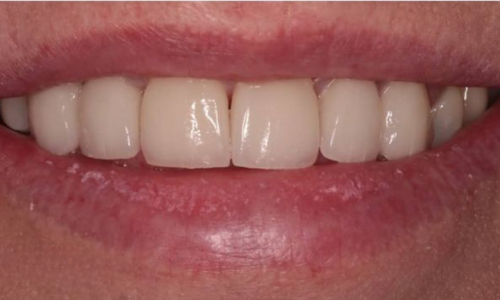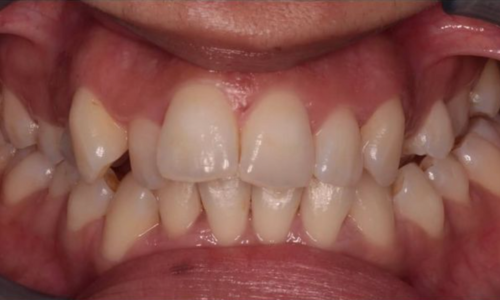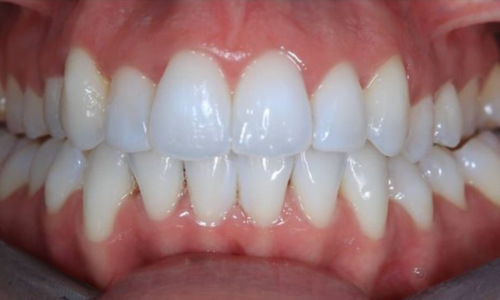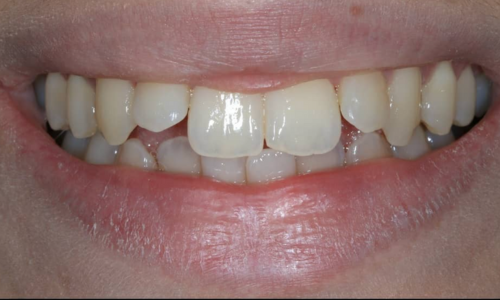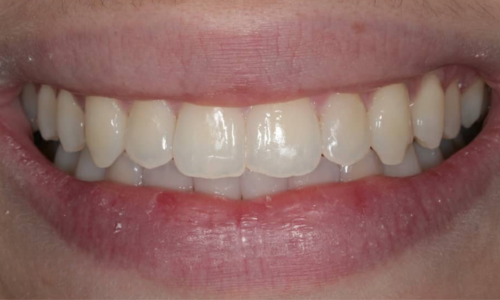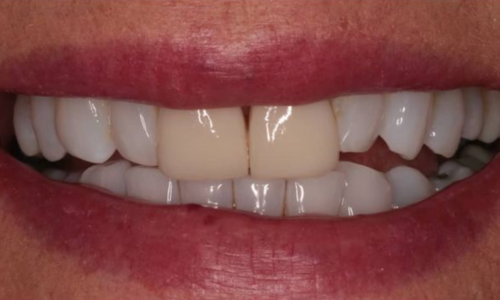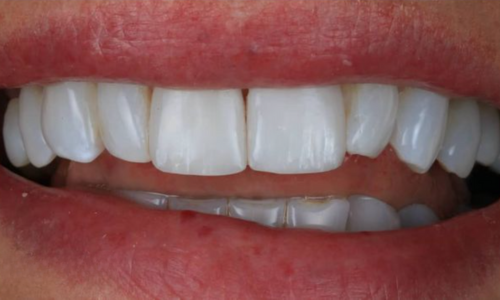
Chipped tooth
What to do right now, what your treatment options are, and why even a small chip deserves attention
It happens in an instant. A bite on something unexpectedly hard, a fall, a knock during sport — and suddenly there is a sharp edge where there was not one before, and the realisation that you have chipped the tooth.
The first question is almost always: how serious is this? And the honest answer is: it depends on how deep the chip goes, which tooth is affected, and how quickly you act.
A chipped tooth is one of the most common dental injuries — and also one of the most varied in terms of severity. A tiny corner chip from a front tooth can often be repaired invisibly in a single 30-minute appointment. A deeper fracture that has exposed the nerve requires something considerably more involved. Understanding where your chip falls on that spectrum, what the treatment options are, and what happens if it is left untreated is what this article covers — specifically, clearly, and without unnecessary alarm.
At Lateral Dental Clinic in Sheffield, led by Dr Matthew Stephens GDC No. 263989 and Dr Anupa Stephens GDC No. 264031, we treat chipped teeth across the full range — from the minor chip that needs a quick composite repair to the fractured cusp requiring a dental crown to the deep fracture involving the nerve that needs root canal treatment before anything else can happen. Here is everything you need to know.
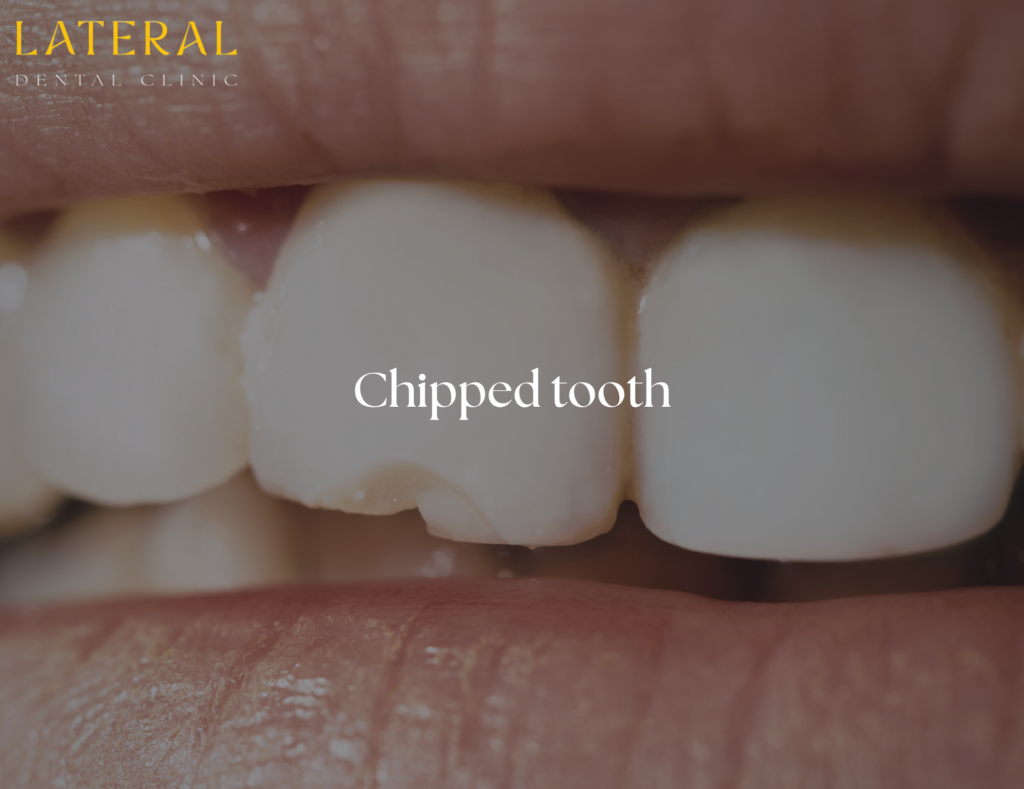
Why even a small chip should not be ignored
The temptation with a minor chip — particularly one that does not hurt and is not in a visible area — is to leave it and see if it becomes a problem. This is an understandable instinct, but it overlooks a few things that are worth knowing.
- Sharp edges cause soft tissue damage. Even a small chip leaves a sharp edge that cuts the tongue, cheek or lip repeatedly. Over time, this chronic trauma to the soft tissue can create a persistent ulcer that is both painful and slow to heal. This reason alone makes a small chip worth attending to promptly.
- Chips expose dentine. Below the enamel surface lies dentine — a softer, more porous layer that is more vulnerable to decay and more sensitive to temperature. A chip that has penetrated the enamel exposes dentine directly to the oral environment. Bacteria access dentine more readily than enamel, acid attacks it more effectively, and decay can progress faster. A chip that looks minor may be creating a vulnerability that develops quietly over months.
- Chips propagate. A fracture in tooth structure is a mechanical weak point. Under the repeated forces of biting and chewing, existing cracks extend. A small chip today can become a larger one — or a split — if the structural integrity of the tooth is not restored. Particularly in teeth with large existing fillings, where the remaining natural tooth structure is already under increased stress.
- The appearance changes over time. Even a chip that causes no immediate discomfort and involves no decay risk still affects the way the tooth looks — and the longer it is left, the more the exposed dentine surface stains and discolours. A chip repaired the week it happened will look seamless. The same chip repaired a year later, after the dentine has stained, is a more complex cosmetic challenge.
What determines how serious a chipped tooth is
The severity of a chip is assessed based on how deep it goes — which layers of tooth structure are affected.
Enamel-only chip The chip is confined to the outer enamel layer. The tooth may be sharp or irregular but there is no sensitivity and no pain. This is the most straightforward presentation and is very commonly treated with composite bonding in a single appointment — rebuilding the missing enamel with a tooth-coloured resin that, once polished, is indistinguishable from the natural tooth.
Dentine involvement The chip has penetrated through the enamel into the dentine beneath. Dentine contains thousands of tiny tubules that connect to the nerve of the tooth, which is why dentine exposure produces sensitivity — particularly to cold, heat, sweet foods and air. The tooth may still be vitally intact, but the exposed dentine needs to be covered promptly to prevent bacterial penetration and escalating sensitivity.
Composite bonding remains an appropriate treatment for many chips that reach dentine — the composite is bonded to both the enamel and dentine surfaces, sealing the exposed tubules and restoring the tooth’s shape. For larger chips where more tooth structure is missing and greater strength is needed, a dental crown is often the more appropriate long-term solution.
Pulp exposure The fracture extends all the way through the enamel and dentine to expose the dental pulp — the nerve and blood vessel tissue at the centre of the tooth. This is typically associated with significant pain, spontaneous aching, or intense sensitivity that does not settle quickly. Root canal treatment is necessary to remove the exposed and infected pulp before the tooth can be restored — usually followed by a dental crown to protect the treated tooth.
Root fracture In some cases — particularly following significant trauma — the fracture extends below the gum line into the root. This is a more serious situation that may not be visible at first inspection and requires X-rays to diagnose. Depending on the depth and orientation of the root fracture, the tooth may or may not be salvageable.
What to do immediately after you or a family member have chipped your tooth
The moments immediately after an injury matter. Here is the practical guidance.
- Rinse gently with warm water. This clears any blood and debris from the area.
- If there is bleeding from the gum, apply gentle pressure with a clean cloth or piece of gauze until it settles.
- Find the fragment if possible. In some cases, a chip of tooth can be reattached — particularly if it is a clean fracture and the fragment is large. Keep it moist in milk or water if you cannot get to a dentist immediately.
- Do not ignore sensitivity. If the chipped tooth is producing significant sensitivity or pain, this indicates dentine or pulp involvement and the tooth needs to be seen promptly — not on an ad hoc basis when it is convenient.
- Protect sharp edges. If the chip has left a sharp edge that is cutting your tongue or cheek, dental wax (available from pharmacies) can be pressed over the edge as a temporary measure until your appointment.
- Book promptly. A same-day or next-day appointment at Lateral Dental Clinic is the appropriate response for any chip that is painful, bleeding significantly, or involves a significant portion of the tooth. For a small, painless enamel chip, booking within the next few days is appropriate.
The treatment options in full
Composite bonding — the most common and most versatile treatment for a chipped tooth
For the majority of patients who have chipped the tooth — particularly front teeth with enamel or shallow dentine chips — composite bonding is the go-to treatment. It is the approach that combines effectiveness, aesthetics, speed and conservation of natural tooth structure better than any other option for chips of this severity.
What the procedure involves:
- The tooth surface is lightly etched with a mild acid to create a micro-porous texture that the bonding agent grips.
- A bonding agent is applied and light-cured to create the adhesive interface.
- Composite resin — tooth-coloured material available in a wide range of shades and opacities — is applied in layers, each one shaped and cured before the next is added.
- The final shape is refined, the bite is checked in all movements, and the surface is polished to match the adjacent tooth.
The result is immediate, natural-looking and requires no drilling of healthy tooth structure in most cases. A small chip on a front tooth can be repaired so seamlessly that even the patient struggles to identify which tooth was treated.
Composite bonding is also reversible — the composite can be removed without permanently altering the tooth, which makes it the most conservative approach available for front teeth in particular.
How long does composite bonding last for a chipped tooth? With good care, five to seven years is typical — after which the composite may need polishing, repair or replacement. It is a durable, proven material but not as hard-wearing as ceramic. For back teeth subject to heavy biting forces, a more robust restoration may be the better long-term choice.
Dental fillings for chipped back teeth
When a chipped tooth is a back tooth — a premolar or molar — the treatment calculus shifts slightly. Back teeth bear significantly heavier occlusal loads than front teeth, and composite bonding as a standalone approach is sometimes less appropriate where the forces involved are considerable.
For smaller chips on back teeth, a dental filling using the same tooth-coloured composite material provides a robust and aesthetically appropriate restoration. The approach is functionally similar to composite bonding but is placed as a restorative filling rather than as an additive cosmetic procedure.
For larger chips that have removed a significant portion of a cusp — particularly on a back tooth that already has an existing large filling — a dental crown that encircles the whole tooth is the more appropriate choice for long-term stability and protection.
Dental crowns — when the chip is too large for composite alone
A dental crown covers the entire visible portion of the tooth above the gum line. It is indicated when:
- The chip has removed so much tooth structure that composite bonding or a filling would not provide adequate strength
- The tooth has already had significant previous restoration and the remaining natural structure is insufficient to support a surface-level repair
- The tooth has had root canal treatment following a deep fracture — root-treated teeth become more brittle and benefit significantly from crown coverage
- A fractured cusp has left a major structural deficiency in a back tooth
Modern crowns — most commonly from zirconia or lithium disilicate ceramic — are both strong and aesthetically natural. The preparation involves reducing the tooth around its circumference to create space for the crown to sit on top; an impression or digital scan is taken and sent to the laboratory; a temporary crown protects the tooth while the permanent one is fabricated.
Root canal treatment following a deep fracture
When someone has chipped my tooth deeply enough to expose the pulp — or when a fracture has allowed bacteria to progress to the pulp over time, causing pulpitis or abscess formation — root canal treatment is the appropriate first step.
This removes the damaged or infected pulp tissue, cleans and shapes the root canal system, and seals it. The tooth is then restored — typically with a post, a build-up of composite material and a crown to provide full coverage.
Root canal treatment has a reputation for being a difficult procedure. In reality, it is carried out under local anaesthetic and — with modern instruments and techniques — is no more uncomfortable during the procedure than any other restorative treatment. The relief following root canal treatment in a tooth that was producing significant pain is often immediate and dramatic. For patients for whom anxiety is a genuine barrier, conscious sedation is available at Lateral Dental Clinic.
Multiple chips and the smile makeover approach
Some patients arrive not with a single chip from a recent incident, but with multiple chipped, worn and irregular teeth — the accumulated result of years of grinding, acid erosion, or simply the way certain teeth are positioned and loaded.
For these patients, a smile makeover approach considers all the teeth as a system rather than treating individual chips in isolation. A comprehensive cosmetic dentistry plan might involve:
- Composite bonding across multiple front teeth to restore edge detail, close small gaps and even out the profile — completing the full treatment in one appointment
- Teeth whitening before bonding to achieve the best combined result
- A night guard to protect the restored teeth from future grinding damage
- Crowns on back teeth where structural restoration is needed alongside the cosmetic work on front teeth
The starting point for this kind of comprehensive planning is a dental check-up — an unhurried assessment that establishes exactly what is present, what is causing it, and what combination of treatments would achieve the patient’s goals most conservatively.
Preventing further chips
Once a tooth has been restored following a chip, certain habits and conditions make further chips more likely — and addressing them is part of the complete treatment plan.
- Bruxism (tooth grinding): One of the most common causes of chipping, particularly to front teeth. Night guards protect the restored and natural teeth from the forces generated during sleep-time grinding, which are significant and cumulative.
- Nail biting and pen chewing: Habitual biting of hard objects — nails, pen lids, pencils — creates repeated impact forces on the incisal edges of the front teeth. These are the same teeth most commonly chipped by this kind of trauma.
- Chewing ice: Very few habits are more predictably damaging to teeth and restorations than chewing ice. The hardness and the thermal shock in combination place significant stress on both enamel and composite.
- Very hard foods: Whole nuts, hard crusts, boiled sweets bitten rather than sucked — these are high-risk foods for the incisal edges and cusps of the teeth. Particularly risky in teeth that have already been repaired or that have large existing restorations.
- Regular check-ups: A dental check-up every six months allows early identification of wear patterns, crack lines forming in the enamel before they become chips, and any changes to existing restorations that need attention before they fail.
The bottom line
A chipped tooth is never completely trivial — even a minor chip is worth attending to promptly for the reasons outlined above. The good news is that the most common presentations of chipped teeth are also among the most straightforwardly treatable, and composite bonding in particular makes same-day, invisible repair of front tooth chips a routine, comfortable procedure.
The urgency level depends on what is involved: enamel-only chips can wait a few days; chips with dentine sensitivity should be seen within a day or two; chips causing significant pain, sensitivity on the nerve, or visible pulp exposure need to be seen today.
At Lateral Dental Clinic in Sheffield, Dr Matthew Stephens GDC No. 263989 and Dr Anupa Stephens GDC No. 264031 assess and treat chipped teeth across every severity level — from a quick composite repair to complex restorative treatment involving crowns and root canal therapy. If you have chipped my tooth and want it assessed and sorted, same-day appointments are available for urgent presentations.
Disclaimer
The information in this article is intended for general educational guidance only and does not constitute personalised dental or medical advice. For concerns about a chipped tooth, please book an appointment with a qualified dental professional for a proper clinical assessment.
Lateral Dental Clinic is a private dental practice in Sheffield, led by Dr Matthew Stephens GDC No. 263989 and Dr Anupa Stephens GDC No. 264031. We offer composite bonding, dental crowns, dental fillings, root canal treatment, dental sedation, smile makeovers, dental check-ups, cosmetic dentistry, Invisalign, porcelain veneers, teeth whitening and general dentistry.
Frequently asked questions
The urgency depends on the severity. If the chip is small, enamel-only and painless, booking within a few days is appropriate. If there is sensitivity, pain, significant missing tooth structure, or bleeding, you should be seen the same day or next day. Any chip that has caused the tooth to feel very different when biting — or that is causing spontaneous pain — needs prompt assessment because these signs suggest the fracture may involve the dentine or pulp. Contact Lateral Dental Clinic and the team will advise on how urgently you need to be seen based on your symptoms.
Yes — in skilled hands, composite bonding on a chipped front tooth is extremely difficult to distinguish from the natural tooth. The composite is matched to the shade and translucency of the existing tooth and polished to the same surface texture. A small edge chip repaired promptly — before the exposed dentine has had time to stain — can be repaired seamlessly in a single appointment. The result is not noticeable from normal conversational distance and is extremely difficult to identify even on close inspection.
Not necessarily. In children, the stage of dental development matters significantly. A chipped primary (baby) tooth is managed differently from a chipped permanent tooth — primary teeth may not need restoration unless there is pain, a sharp edge, or risk of infection, depending on how close the child is to naturally losing the tooth. A chipped permanent tooth in a child or teenager, particularly a newly erupted one, deserves prompt attention because the pulp chamber is proportionally larger in younger teeth and more vulnerable to bacterial invasion through a chip. The team at Lateral Dental Clinic treats patients of all ages and will assess each case individually.
Yes. At Lateral Dental Clinic, conscious dental sedation is available for all dental procedures, including composite bonding for chipped teeth, dental fillings, crowns and root canal treatment. Sedation allows treatment to proceed while you remain completely relaxed and comfortable, with little to no memory of the appointment. Dental anxiety should never be a reason to leave a chipped tooth untreated — please mention your anxiety when you book and the team will plan accordingly.
Composite bonding adds tooth-coloured resin material to the surface of the tooth — rebuilding the missing portion without requiring any significant reduction of the existing tooth. It is faster, more conservative and less expensive than a crown, and is the right choice for most front tooth chips that are not too large. A dental crown covers the entire visible portion of the tooth — requiring preparation (reduction) of the tooth around its circumference — and is the right choice when the chip has left insufficient tooth structure for a surface repair to be stable and durable, or when the tooth has had root canal treatment and needs full coverage for protection.