Receding gums
Why they happen, what they mean for your teeth, and what can actually be done about it
You might notice it in the mirror — teeth that look longer than they used to. Or you might feel it first, as cold water or a cold breeze suddenly produces a sharp sensitivity you never had before. Either way, when the gums start to pull away from the teeth, it rarely announces itself dramatically. It creeps.
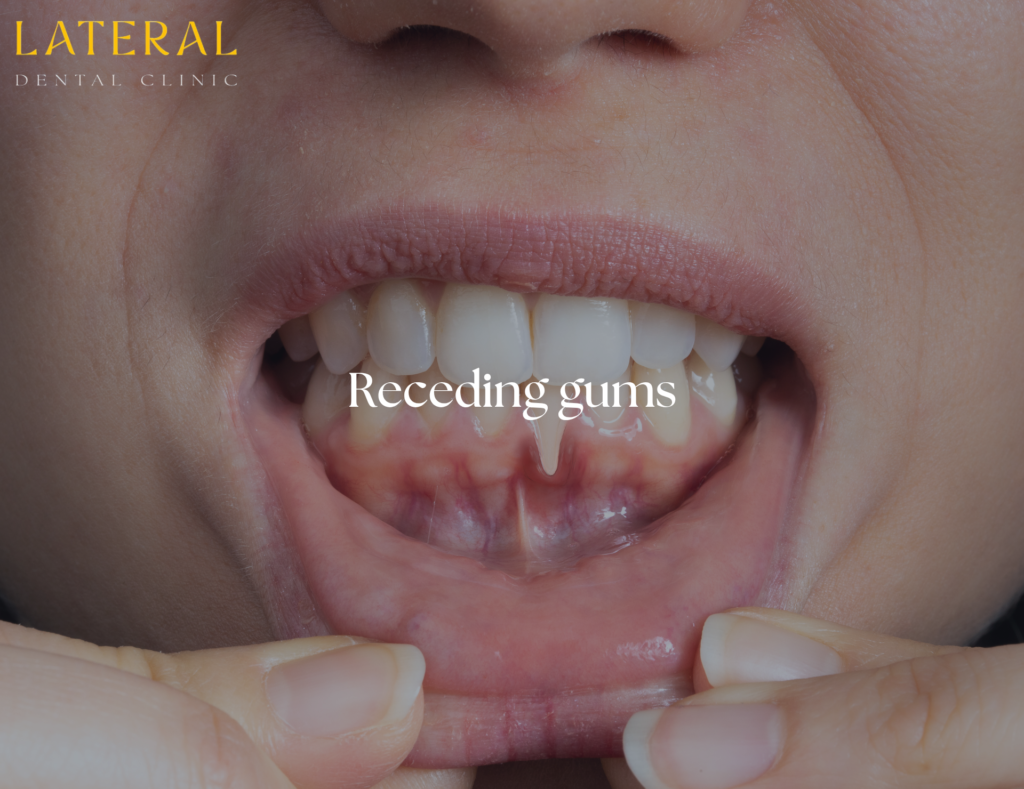
Receding gums — also called gingival recession — is one of the most common dental conditions in adults, and one of the most frequently underestimated. It is not simply a cosmetic concern. The gum tissue and the bone beneath it exist specifically to support and protect the teeth. When gum tissue recedes, the root surface becomes exposed — and root surfaces are not designed for the oral environment the way enamel is. They are more susceptible to decay, more sensitive to temperature, and — if recession is significant and progressing — they signal that the underlying bone may be following the same path.
At Lateral Dental Clinic in Sheffield, led by Dr Matthew Stephens GDC No. 263989 and Dr Anupa Stephens GDC No. 264031, receding gums is a condition we see and manage across a wide range of presentations — from early, asymptomatic recession picked up at a routine general dentistry check-up to more advanced cases where gum treatment or surgical intervention is appropriate.
This is everything you need to know.
What receding gums actually are — and why the anatomy matters
The gum tissue — gingiva — normally covers the root of the tooth completely, meeting the enamel at the point called the cemento-enamel junction (CEJ). This junction is the natural border between the crown of the tooth (covered by enamel) and the root (covered by cementum). In a healthy mouth with healthy gum levels, the CEJ sits just below or at the gum line and is not visible.
When the gum recedes, it drops below the CEJ, exposing cementum — the softer, porous surface covering the root. Unlike enamel (which is approximately 96% mineral and the hardest substance in the body), cementum is only around 65% mineral. It is significantly softer, more porous and considerably more vulnerable to:
- Temperature sensitivity — dentinal tubules in the root dentine are closer to the surface and more directly exposed to stimuli
- Decay — root caries (decay on the root surface) progresses more rapidly than enamel decay and is harder to detect and restore
- Wear — the root surface wears with brushing far more readily than enamel
This is why recession matters clinically beyond appearance. The exposed root is simply less equipped to handle what the oral environment demands of it.
Why do gums recede? The causes — and why knowing yours matters for treatment
There is no single cause of receding gums. The cause in each individual case determines both the prognosis and the appropriate treatment — which is why a proper clinical assessment at a dental check-up matters far more than any self-diagnosis from reading symptoms online.
Gum disease (periodontitis)
The most clinically significant cause of gum recession, and the one with the broadest implications. Periodontitis is a bacterial infection of the tissues supporting the teeth — the gum, the periodontal ligament, and the underlying bone. As the infection progresses, the supporting bone is destroyed by the body’s own immune response to the chronic bacterial challenge. The gum follows the bone, and recession is the visible result.
What makes periodontitis-driven recession particularly important to identify is that it is rarely happening only where you can see it. Recession visible on the buccal (cheek-facing) surface of a tooth is typically the tip of the iceberg — the bone loss beneath and between the teeth is usually more extensive than surface appearances suggest.
The management of periodontitis-driven recession involves treating the gum disease first — professional debridement of the root surfaces to remove the bacterial deposits driving the process, regular gum treatment and maintenance appointments to prevent reactivation, and improved home care. Only once the disease is stabilised can the question of any surgical intervention to address the recession itself be meaningfully considered.
Overly aggressive toothbrushing
This is probably the most common cause of recession in patients without significant gum disease — and one that is entirely preventable. Brushing too hard, using a medium or hard bristle brush, using a scrubbing side-to-side technique, or abrasive whitening toothpastes used repeatedly over years progressively abrades the gum margin and the root surface simultaneously.
The recession produced by toothbrush abrasion has a characteristic appearance: it tends to be:
- Located on the outer (buccal) surfaces of the most prominent teeth — upper canines and premolars most commonly
- Symmetrical and bilateral rather than occurring only on one side
- Associated with a notch or groove at the gum margin where the gum has been worn away
- Not associated with deep pocketing or significant bone loss (distinguishing it from periodontitis)
The good news: switching to a soft bristle brush, using a gentle circular technique rather than horizontal scrubbing, and reducing pressure stops further abrasion progression. The recession that has already occurred does not grow back through technique change alone, but further recession can be halted.
Bruxism and tooth grinding
The abnormal forces produced by clenching and grinding — particularly when acting on teeth that have already lost some gum support — can drive recession and make existing recession significantly worse. The mechanism is less direct than brushing trauma; rather, excessive occlusal forces stress the periodontal support in ways that accelerate bone and gum loss in already compromised areas.
Patients with bruxism who are developing recession benefit from addressing both — a night guard to protect against nocturnal grinding forces, combined with gum treatment for any underlying disease component.
Thin gum tissue and genetic predisposition
Some patients are born with thin, fragile gum tissue — called a thin periodontal biotype — that is inherently more susceptible to recession from any cause. This is a genetic factor rather than a lifestyle one, and it means that patients with thin tissue need to be particularly diligent about minimising all other recession risk factors. For these patients, gum surgery to increase tissue thickness and coverage may be appropriate even in the absence of significant gum disease.
Orthodontic treatment
Moving teeth through bone — whether with traditional braces or with Invisalign — can sometimes cause recession if teeth are moved outside the envelope of available bone. This is a recognised risk in orthodontic treatment, particularly when teeth are moved significantly forward or when the starting gum tissue is thin. Experienced clinicians assess this risk before and during treatment and modify the treatment plan where necessary.
Lip and tongue piercings
Jewellery placed in the lower lip or the tongue can repeatedly traumatise the gum tissue on the lingual (tongue-side) surface of the lower front teeth. This type of recession is highly localised and directly attributable to the traumatic contact. The management is straightforward in principle — removing the source of trauma — though the recession already produced requires clinical assessment to determine whether intervention is needed.
The consequences of untreated gum recession
Root sensitivity
The most immediately noticeable consequence. Exposed root dentine is richly supplied with fluid-filled dentinal tubules that communicate with the nerve of the tooth. Cold air, cold water, acidic foods, sweet foods — all of these trigger fluid movement in the tubules, which stimulates the nerve and produces the sharp, brief sensitivity that patients describe as making certain foods and temperatures genuinely unpleasant.
This sensitivity is manageable with desensitising toothpastes in mild cases, but does not resolve without addressing the underlying recession.
Root decay
Cementum and root dentine decay significantly faster than enamel when exposed to the oral environment. Root caries (decay on the root surface) is a growing clinical concern, particularly in older adults with recession. It is less visible than enamel decay, can progress rapidly, and is harder to restore effectively because the root surface is in a less accessible location and the material properties differ from enamel.
Fluoride toothpaste and professional fluoride applications help protect exposed root surfaces, but nothing substitutes for addressing the recession itself.
Aesthetic impact
Teeth that appear “too long” — the colloquial description of visible recession — change the appearance of the smile in ways that many patients find distressing. For patients whose recession affects the upper front teeth, the cosmetic impact can significantly affect confidence.
Loss of tooth support
If recession is driven by periodontitis and the underlying bone continues to be lost, the stability of the affected teeth becomes an increasing concern. A tooth with severely reduced bone support will eventually become mobile. Early and effective gum treatment prevents this progression — but it requires timely intervention.
Impact on existing and future restorations
Recession changes the clinical environment around restored teeth. A dental crown placed when the gum was at a certain level may show a visible margin as gum recedes. Recession around teeth with existing composite bonding can expose the junction between the restoration and the tooth.
What can actually be done about receding gums?
The answer depends on the cause, the severity, the rate of progression, and what the patient wants to achieve.
Treating the underlying cause first
Whatever the primary driver of recession, it must be addressed before any restorative or surgical intervention. Recession that continues to progress because its cause is unaddressed will not stay corrected by any gum surgery, however well executed.
This means:
- Professional gum treatment and debridement to halt periodontitis-driven recession
- Technique improvement and softer brush for toothbrush abrasion
- Night guard for bruxism-associated recession
- Removal of the trauma source for piercing-related recession
Professional gum treatment (non-surgical)
The foundation of managing periodontitis-driven recession is root surface debridement — professional cleaning beneath the gum line to remove the calculus and bacterial deposits that drive the progressive bone and gum loss. This is carried out by a dental hygienist or clinician, typically under local anaesthetic for deeper pockets, and produces measurable improvement in gum health over the following weeks.
At Lateral Dental Clinic, gum treatment is planned individually based on the clinical findings — pocket depths, bone levels on X-ray, the distribution of recession, and the patient’s medical history and home care habits. For patients anxious about gum treatment, conscious sedation is available — allowing thorough treatment to be carried out comfortably and with minimal memory of the appointment.
Surgical options for recession coverage
Where recession has produced a clinical problem — significant sensitivity, rapid progression, aesthetic concern, or increased risk of root decay — surgical procedures can increase tissue coverage over the exposed root surface.
The main options include:
Connective tissue graft (subepithelial connective tissue graft) A small piece of connective tissue from the palate is used to augment the gum tissue at the recession site. This is the most widely used and most evidence-supported gum grafting technique. It increases tissue thickness and volume and typically achieves good root coverage.
Coronally advanced flap Gum tissue from below the recession site is mobilised and advanced upward to cover the exposed root. Often combined with a connective tissue graft for enhanced stability and coverage.
Pinhole surgical technique A minimally invasive approach using a small puncture (pinhole) in the gum tissue to reposition it coronally without traditional incisions or sutures. Less widely available, but associated with faster healing for appropriate cases.
Whether surgical recession coverage is appropriate and which technique is best suited to a specific case is assessed during consultation at Lateral Dental Clinic. The decision takes into account recession depth, the width of attached gingiva, root anatomy, and patient factors including smoking status, which significantly affects surgical outcomes.
Managing the consequences
Where recession has produced root sensitivity, desensitising agents — either applied professionally during a gum treatment appointment or used at home in desensitising toothpastes — help manage the symptoms while the underlying cause is addressed. For very sensitive exposed roots, a composite restoration placed over the root surface can provide coverage and protection.
Where recession around a tooth is contributing to the failure of an existing restoration — a crown margin becoming visible, or root decay developing adjacent to a filling — the restoration needs to be reviewed in the context of the recession. This may mean replacing the crown to a different margin design or placing a new restoration that accounts for the current gum level.
The connection to root canal treatment
Where recession has allowed decay to advance on the root surface to the point of pulpal involvement, root canal treatment becomes necessary — removing the infected pulp and sealing the tooth before any restorative work over the root decay. This is a clinical scenario that more commonly arises in older adults with multiple receding teeth and significant root exposure over many years.
The role of monitoring and maintenance
For most patients with receding gums, the ongoing goal is stability — preventing further recession rather than necessarily reversing what has already occurred. This requires:
- Regular clinical monitoring. Recession measurements taken at each dental check-up allow the team to identify whether recession is stable, slowly progressing, or accelerating — and to adjust the management plan accordingly.
- Consistent home care. Soft brush, gentle technique, interdental cleaning every day, fluoride toothpaste. These are the daily habits that protect against further recession from toothbrush trauma and gum disease.
- Regular professional gum treatment. For patients with a history of periodontitis, three to four monthly gum treatment maintenance appointments are the clinical standard. These appointments remove the bacterial deposits that would otherwise reactivate the disease.
The bottom line
Receding gums are common, but common does not mean inevitable or untreatable. The causes are identifiable, the progression can be halted with appropriate treatment, and in cases where coverage is clinically indicated, surgical options exist that produce meaningful improvement.
What matters most is catching recession early — before the root surface is substantially exposed, before root decay has begun, and before the bone loss has progressed to the point where tooth stability is compromised. A dental check-up that includes proper periodontal assessment and recession measurement is the mechanism for catching this early.
At Lateral Dental Clinic in Sheffield, Dr Matthew Stephens GDC No. 263989 and Dr Anupa Stephens GDC No. 264031 assess and manage receding gums as part of thorough, individually planned general and specialist care. Whether you need gum treatment, sedation to make gum treatment manageable, or a broader discussion about what your recession means and what to do about it — we are here to give you a clear, honest picture.
Disclaimer
The information in this article is intended for general educational guidance only and does not constitute personalised dental or medical advice. For concerns about gum recession or gum health, please book an appointment with a qualified dental professional for a proper clinical assessment.
Lateral Dental Clinic is a private dental practice in Sheffield, led by Dr Matthew Stephens GDC No. 263989 and Dr Anupa Stephens GDC No. 264031. We offer gum treatments, general dentistry, root canal treatment, dental crowns, dental sedation, Invisalign, composite bonding, porcelain veneers, teeth whitening and smile makeovers.
Frequently asked questions
No — gum tissue that has receded does not regenerate spontaneously. The body does not produce new gingival tissue to cover an exposed root without clinical intervention. What is possible is halting further recession by addressing the cause, protecting the exposed root surface through good oral hygiene and fluoride, and — where clinically appropriate — surgical tissue grafting to restore coverage. This is why regular dental check-ups to monitor recession are important: catching it early limits the extent of loss before it becomes a more complex problem.
No — gum disease is an important and clinically significant cause, but it is not the only one. Aggressive toothbrushing technique, tooth grinding, thin gum tissue from genetic predisposition, orthodontic treatment, and lip or tongue piercings can all drive recession independently of gum disease. The cause matters for treatment: recession from toothbrush abrasion in a healthy mouth is managed differently from periodontitis-driven recession with associated bone loss. A proper assessment at Lateral Dental Clinic identifies which cause applies to your specific case.
Professional gum treatment — root surface debridement — is carried out under local anaesthetic, which means the procedure itself should involve pressure and sensation but not pain. The area can be sore for a few days after treatment, managed comfortably with over-the-counter pain relief. For patients who are particularly anxious about gum treatment or about dental appointments generally, conscious sedation at Lateral Dental Clinic allows treatment to proceed while you remain deeply relaxed and largely without memory of the appointment afterwards.
Recession is often asymptomatic in its early stages — which is why clinical monitoring is important. Signs that recession may be progressing include: teeth appearing noticeably longer than they previously did, increased temperature sensitivity in specific teeth, a visible dark area at the gum margin where root dentine has become exposed, or food packing more readily around specific teeth. If you have noticed any of these, a dental check-up with periodontal assessment will establish whether recession is present and, if so, whether it is stable or progressing.
A dental crown covers the visible crown of the tooth but cannot cover the exposed root surface where recession has occurred — the crown margin sits at or just below the gum line, not at the point the gum has receded to. Where a crown has been placed and subsequent recession has made its margin visible, options include replacing the crown with a new one designed around the current gum level, gum surgery to improve the gum level, or a combination of both. The appropriate approach depends on the degree of recession, the condition of the existing crown and the health of the supporting bone.